
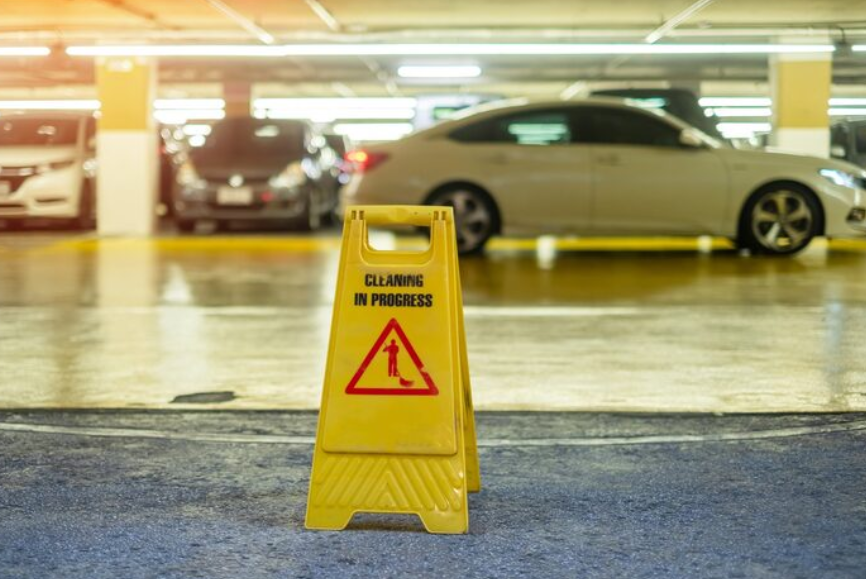
A well-maintained parking lot does more than make a property look attractive. Clear pavement markings help drivers understand where to park, where to drive, and how to move safely through the property. Over time, parking lot lines naturally fade because of sunlight, rain, snow, vehicle traffic, oil spills, and general wear. When markings become difficult to see, parking lot restriping can restore the appearance and improve the overall safety of the property.
Parking lot restriping involves applying fresh paint or pavement markings to existing parking spaces, traffic lanes, arrows, loading areas, pedestrian crossings, fire lanes, and other designated areas. For businesses, shopping centers, offices, apartment communities, and other commercial properties, keeping these markings visible is an important part of routine pavement maintenance.
When Does a Parking Lot Need Restriping?
One of the most obvious signs that a parking lot needs restriping is faded or barely visible lines. If drivers have difficulty identifying individual parking spaces, the lot may begin to look disorganized. Vehicles may park unevenly or take up more than one space, reducing the number of available parking spots.
Weather is another major factor. Constant exposure to sunlight can cause pavement markings to fade, while rain, snow, ice, and temperature changes can accelerate deterioration. Areas with heavy traffic may lose their markings even faster because vehicles repeatedly travel over the painted surfaces.
A parking lot may also need restriping after asphalt repair or resurfacing. Patching and resurfacing can cover existing markings, making new pavement striping necessary once the work is complete.
Businesses should also consider restriping when the layout of the parking lot changes. If a property adds accessible parking spaces, changes traffic flow, creates loading zones, or modifies entrances and exits, the pavement markings should accurately reflect the new layout.
The frequency of restriping depends on traffic, weather, pavement condition, and the quality of the original paint. Some parking lots may need attention every couple of years, while heavily used properties may require more frequent maintenance.
How Restriping Improves Safety and Appearance
Clear markings provide drivers with visual guidance. Parking spaces establish where vehicles should be positioned, while arrows and directional markings help control traffic flow. Clearly marked pedestrian crossings can also make it easier for drivers to recognize areas where people may be walking.
Accessible parking spaces are particularly important. Properly marked accessible spaces and access aisles help ensure that designated areas remain identifiable and available for people who need them. Businesses should follow applicable accessibility requirements when installing or refreshing these markings.
Restriping can also improve the appearance of a commercial property. Fresh, straight lines make a parking lot look organized and professionally maintained. Since the parking lot is often one of the first parts of a business that customers see, its condition can influence their overall impression of the property.
Good striping can also help a property use its available parking space efficiently. A properly planned layout can create clearly defined spaces while maintaining appropriate traffic lanes and pedestrian areas.
Before restriping, the pavement should be evaluated. If the asphalt has major cracks, potholes, drainage problems, or structural damage, simply painting new lines may not be enough. In some cases, repairs or resurfacing should be completed before new markings are applied.
Planning a Parking Lot Restriping Project
Property owners should plan restriping when weather conditions are suitable. Pavement should generally be clean and dry so that the paint can adhere properly. The parking lot may also need to be temporarily closed or partially restricted while the markings are applied and allowed to dry.
It is helpful to work with an experienced pavement contractor who can assess the existing layout and recommend appropriate markings. The contractor can help determine where parking spaces, directional arrows, crosswalks, curbs, fire lanes, and other markings should be placed.
Property owners should also consider future needs before finalizing the layout. For example, if the business expects changes in traffic patterns or parking demand, adjusting the design during restriping may be more efficient than making changes later.
Conclusion
Parking lot restriping is a relatively simple maintenance project that can have a significant impact on safety, organization, and property appearance. Faded markings can create confusion, reduce parking efficiency, and make a commercial property look neglected. Fresh, clearly defined lines provide better guidance for drivers and pedestrians while giving the parking lot a clean and professional appearance. By monitoring pavement markings and scheduling restriping when necessary, property owners can maintain a safer and more attractive parking area.