
Navigating modern financial systems requires a clear understanding of the distinct avenues available for capital growth and risk mitigation. Many retail participants approach the financial landscape assuming all trading frameworks function under the exact same parameters. However, knowing the unique processes underlying each asset class is required to spread beyond standard paper tools. Timeline expectations, systemic volatility limits, and capital efficiency methods are important factors in choosing the suitable setting. People can create more robust portfolios that are protected against unforeseen market declines by assessing how various vehicles handle both domestic corporate changes and global macroeconomic shocks.
Core Asset Characteristics: Corporate Fractional Stakes vs. Physical Resource Access
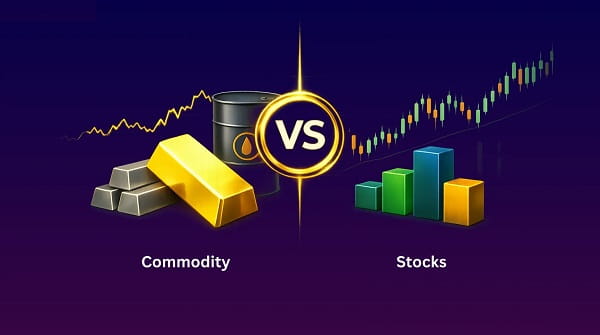
The structural divergence between these two financial avenues begins with the actual asset being traded. When exploring the equity universe, an investor purchases a fractional ownership slice in a concrete corporate entity, gaining rights to potential dividends, voting power, and compounding capital appreciation tied directly to corporate earnings and broader domestic growth. Conversely, entering the real-asset derivatives ecosystem exposes capital directly to the price fluctuations of physical materials rather than commercial corporate cash flows. This segment focuses entirely on globally utilized inputs—ranging from precious metals to industrial energy resources—where participants capitalise strictly on supply-and-demand imbalances without taking ownership of corporate boards. Engagement here involves active commodity trading rather than long-term equity accumulation. Understanding this distinction helps participants align their financial choices with specific, targeted macroeconomic trends.
Primary Price Drivers: Analyzing Microeconomic Health and Macroeconomic Shocks
These two areas’ core value engines react to entirely different sets of economic factors. Quarterly revenue growth, operational profit margins, leadership changes, and regional industry regulations are some of the firm-specific factors that affect corporate equity prices. On the flip side, raw resource values ignore corporate balance sheets entirely. Rather, they respond violently to multinational production group choices, global geopolitical conflicts, sudden changes in currency values, and yearly weather patterns that impact farming returns. Because these raw inputs represent the foundational building blocks of global infrastructure, their baseline value expands naturally during broader inflationary cycles. Consequently, implementing structured commodity trading routines provides an effective portfolio buffer, as physical material trends often display zero correlation with corporate equity benchmarks, preserving capital when paper indices encounter systemic downturns.
Side-by-Side Structural Evaluation for Active Portfolio Design
To map out execution requirements precisely, participants can evaluate these distinct structural variations side by side:
|
Parameter |
Equity-Based Framework |
Raw Material Framework |
|
Primary Instruments |
Delivery Shares & Equities |
Leveraged Futures & Options Contracts |
|
Contract Expiration |
Indefinite Holding Lifespan |
Pre-determined Fixed Expiry Dates |
|
Passive Rewards |
Dividends & Corporate Bonuses |
Zero Yield; Absolute Capital Returns Only |
|
Leverage Available |
Lower Operational Leverage |
High Margin-Based Leverage |
|
Exchange Hours |
Standard Domestic Market Timings |
Extended Hours (Metals/Energy) |
Contract Lifespans and Margin Requirements: Managing Settlement Rules
Execution style and risk profiles vary significantly due to how trades are settled and the lifespan of the positions. In the cash equity segment, an investor can purchase shares and hold them for years in a digital registry, completely unbothered by temporal deadlines or compounding margin calls. In contrast, alternative market participants operate primarily within derivative contracts that carry strict, predetermined expiration dates. This structural condition means that positions must be actively closed out or rolled over to subsequent months to avoid automatic cash or physical settlement cycles. Furthermore, the presence of substantial leverage in this arena means that even small fluctuations in global resource valuations can lead to swift, real-time capital adjustments. Therefore, incorporating stock trading strategies remains a popular choice for building long-term generational wealth through steady compounding. The long-term nature of equities lets investors patiently weather short-term volatility without facing the constant pressure of expiring derivatives contracts.
Aligning Transaction Tools with Long-Term Strategic Goals
To balance a portfolio effectively across both corporate equities and raw physical inputs, selecting a modern financial intermediary is crucial. Historically, managing these distinct asset classes required handling separate clearing desks, navigating fragmented execution platforms, and maintaining split pools of capital. Advanced financial ecosystems have completely removed these operational barriers by introducing unified multi-asset architectures. Utilizing an integrated account setup enables self-directed participants to allocate capital toward long-term stock trading investments while simultaneously capturing short-term tactical opportunities in physical resource markets. Transitioning away from outdated percentage-based commission models in favor of transparent, flat-rate execution fees—such as a fixed ₹20 per completed order—further protects net returns from high frictional costs. Ultimately, combining disciplined risk management with flat-fee execution gives investors the freedom to pursue corporate compounding alongside physical asset hedging, building a truly resilient financial future.
Navigating Account Setup and Capital Commitments
For retail participants looking to optimize their market approach, establishing a multi-asset framework is the standard next step. Combining these diverse strategies under one centralized login ensures maximum margin efficiency and clear portfolio visibility. Actively monitoring your total risk exposure across both corporate shares and volatile global resource contracts allows for seamless, data-driven rebalancing as macroeconomic conditions change. By deploying capital through zero-percent flat brokerage setups, self-directed savers can execute tactical shifts without worrying about high transaction costs eating into their hard-earned returns.